In many working environments, hoses are part of daily operations. They carry air, water, or other fluids to where they are needed. After the task is done, the hose has to go back to its storage position. That second step often takes more time than expected, especially when the hose is long or used repeatedly.
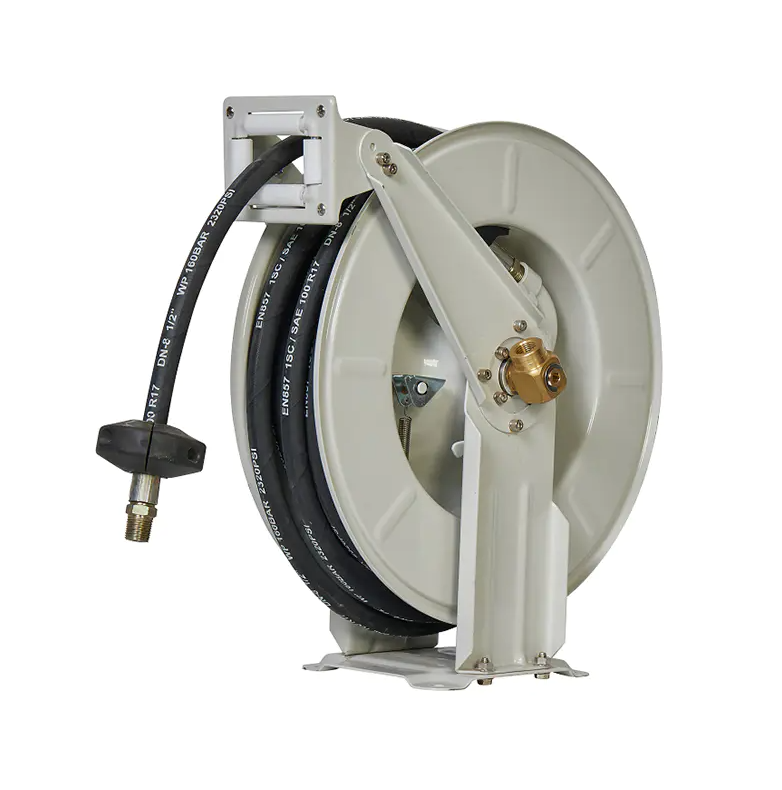
A spring rewind hose reel changes this routine. Inside the reel, a spring stores energy when the hose is pulled out. Once the user releases the hose, the stored force brings it back automatically. The movement feels simple, but it solves a very practical problem that appears in many industries.
Instead of focusing on one field, it is easier to see how widely this tool is used and why it appears in so many different working scenes.
Hoses are flexible, but they are not always easy to control. When they are left on the floor, they can block walking paths. When they are stored loosely, they may twist or wear out faster than expected.
A spring rewind system helps reduce these problems by controlling both extension and return.
In daily use, it brings a few practical changes:
It does not change how the hose works. It changes how the hose is handled between tasks.
In workshop environments, hoses are used constantly. Air supply, cleaning tasks, and maintenance work all depend on them. Because these tasks repeat many times a day, hose management becomes part of the workflow.
Without a proper storage method, hoses tend to spread across the floor. That makes movement slower and sometimes inconvenient.
Spring rewind hose reels help by keeping hoses in a controlled position. The reel is usually mounted on a wall or overhead structure. The hose is pulled down when needed and returns automatically afterward.
Common workshop uses include:
The key change here is not speed alone. It is the reduction of repeated manual handling.
Car repair and maintenance spaces depend heavily on hoses. They are used for air tools, cleaning work, and fluid handling. Since these tasks happen repeatedly around different parts of a vehicle, hose movement becomes frequent.
A spring rewind hose reel reduces the need to manage the hose manually between each step.
Typical usage includes:
After use, the hose returns to its storage position on its own. This helps keep the working area clearer, especially in busy service bays where multiple technicians may work at the same time.
Construction sites change frequently. Work areas shift as projects progress, and tools move from one location to another. In such conditions, hoses are used for many short-term tasks.
They may be connected to cleaning equipment, cutting tools, or temporary water systems. Because of the changing layout, hoses are often extended and retracted many times during a single workday.
Spring rewind hose reels help manage this movement more easily.
They are commonly used for:
Instead of manually collecting hoses each time, the reel brings them back into place automatically.
Agricultural environments cover large spaces. Equipment is spread across fields, storage areas, and processing zones. Hoses are used for spraying, cleaning, and water delivery.
Without controlled handling, hoses may need to be dragged across long distances, which takes time and can affect their condition over time.
Spring hose reels reduce this effort by managing hose extension and return in a single system.
Common agricultural uses include:
The reel keeps hoses stored when not in use, which helps maintain order across wide working areas.
Cleaning work often involves continuous movement across large spaces. Floors, walls, equipment areas, and outdoor zones may all be part of one task.
Hoses are needed for water flow or cleaning systems, and they are frequently moved from one area to another.
Spring hose reels help reduce interruptions caused by hose handling.
They are used in:
Instead of dragging hoses behind, workers can extend and release them as needed, which makes movement more flexible.
Manufacturing environments usually combine several processes in one space. Hoses may be used for air supply, cleaning, cooling, or supporting machines.
Because multiple tasks happen in a limited area, organization becomes important. Loose hoses can interfere with movement or occupy space needed for other operations.
Spring hose reels help keep the workspace structured.
Typical uses include:
The consistent return of the hose helps maintain a clearer working environment.
Not all work happens inside fixed facilities. Some operations take place on-site or in mobile setups. Service vehicles and field units often carry hose systems for temporary use.
In these situations, quick deployment and storage matter more than anything else.
Spring hose reels are used because they simplify both actions.
They appear in:
The hose can be used immediately and stored quickly afterward, which helps reduce downtime between tasks.
One of the most noticeable effects is improved organization.
Hoses that remain on the ground can interfere with movement or get caught under equipment. Over time, this also affects durability.
Spring hose reels reduce these issues by storing the hose as soon as it is released.
This leads to:
Even small improvements in organization can make daily work feel more manageable.
As working environments become more flexible, equipment needs to support movement instead of limiting it.
Hoses are still widely used across many industries, but the way they are managed has changed. Manual handling takes time and can interrupt workflow.
Spring hose reels fit into this change because they simplify one repeated action: storing the hose after use.
The pattern stays the same across different fields:
This simple cycle explains why the system continues to appear in new environments over time.
Although the industries are different, the requirement behind them is similar. Every application involves a hose that needs to move freely during use and return neatly afterward.
Spring rewind hose reels support this cycle in a practical way. They do not change the work itself. They only make hose handling more controlled and less repetitive.
That shared need is what connects workshops, farms, construction sites, cleaning services, manufacturing plants, and mobile operations under one simple mechanism.
Quick Links
Product Categories
Contact Us
+86-13695828855
+86-15988773632 -abner lee
+86-13989700818 -Friendship Ge
No. 3, Xinbin Road, Yangwan Industrial Zone, Qiaoxia Town, Yongjia County, Wenzhou City, Zhejiang Province
Get in Touch
 Oil & Gas Refueling Equipment
 English
 中文简体
中文简体
 Español