Vent Valves & Flame Arrestors

Home / Products / Underground Storage Tank Equipment / Vent Valves & Flame Arrestors / Integrated Flame-Arrest Pressure Vacuum Breather Valve – For Aboveground Fuel Storage Tanks

Integrated Flame-Arrest Pressure Vacuum Breather Valve – For Aboveground Fuel Storage Tanks

Integrated Flame-Arrest Pressure Vacuum Breather Valve – For Aboveground Fuel Storage Tanks

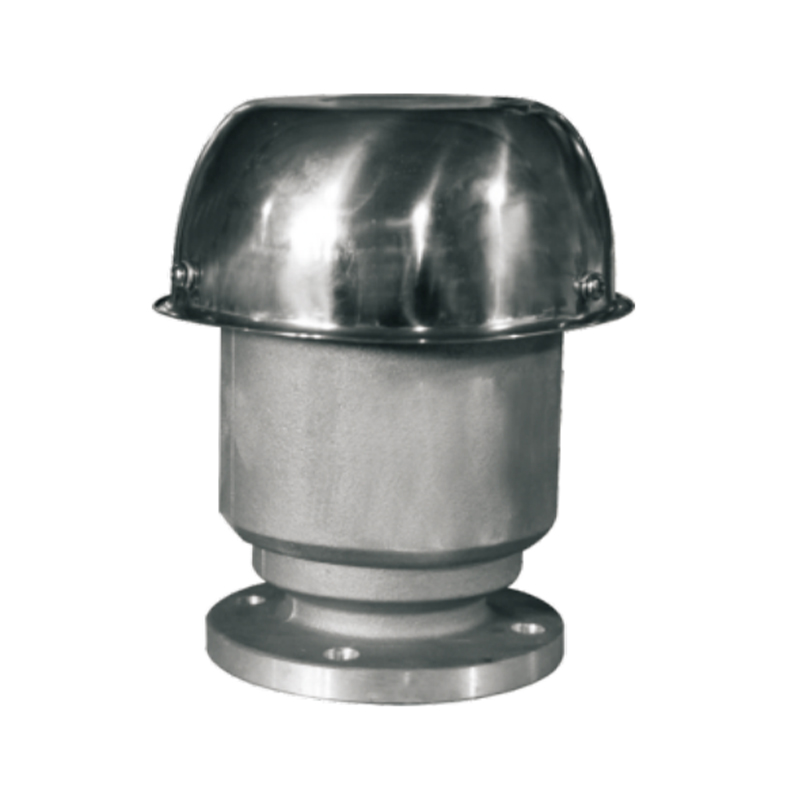
In fuel storage systems where flammable vapors are constantly present, pressure control alone is not enough. Protection against ignition sources is equally critical. The HY625Z-XX Series Pressure Vacuum Breather Valve with Built-in Flame Arrestor is specifically designed to provide both pressure regulation and flame protection in a single compact unit, making it ideal for gas stations, oil depots, and aboveground fuel storage tanks.

Across different regions, this type of valve is known under various names. In international markets, it is commonly referred to as a Pressure Vacuum Breather Valve, PV Safety Valve, or Tank Vent Valve with Flame Arrestor. In Europe, it may be called a Pressure-Vacuum Relief Valve with Integrated Flame Trap, while in Russia, the Middle East, and parts of Asia, users often describe it as an Explosion-Proof Tank Breathing Valve. Regardless of terminology, the core function remains the same: maintaining safe tank pressure while preventing flame propagation.

The HY625Z-XX series is typically installed on the vent pipe at the top of aboveground storage tanks, with a recommended height of approximately 4.5 meters. Under normal conditions, the valve remains closed to preserve tank tightness and minimize vapor loss. When internal pressure rises due to temperature changes or loading operations, the pressure side of the valve opens automatically to release excess vapor. When negative pressure occurs during unloading or cooling, the vacuum side opens to allow air intake, while the pressure valve stays sealed. This balanced operation protects the tank structure from deformation or collapse.

What distinguishes the HY625Z-XX series is its built-in flame arrestor design. Unlike external flame arrestors that increase installation height and maintenance complexity, this valve integrates the flame arresting element directly into the valve body. The foldable aluminum arrestor element effectively stops flame transmission while maintaining smooth airflow. Combined with a stainless-steel cap and robust aluminum body, the valve offers reliable fire protection without sacrificing ventilation performance.

The valve is engineered to meet both international and domestic pressure standards. For global markets, the positive pressure opening is calibrated at +3 inches of water column (≈ +750 Pa), while the negative pressure activation is -8 inches of water column (≈ -2000 Pa). For the Chinese domestic market, the positive pressure setting is +9 inches of water column (≈ +3000 Pa), with the same negative pressure threshold. These precise settings help reduce evaporation losses while ensuring tank safety under varying operating conditions.

Connection flexibility is another advantage of the HY625Z-XX series. The standard configuration uses a 2-inch aluminum flange, with optional female NPT or BSP threaded connections (1.5 inch or 2 inch) as required. Custom flange standards can also be manufactured to match specific project requirements, making the valve suitable for both new installations and retrofit projects.

Before installation, it is recommended to manually actuate the poppet to confirm smooth movement, especially if the valve has been stored for an extended period. An integrated inlet screen helps prevent foreign particles from entering the valve body, ensuring reliable sealing and long service life.

By combining pressure relief, vacuum protection, and flame arresting functions into one compact unit, the HY625Z-XX Series Integrated Flame-Arrest Pressure Vacuum Breather Valve delivers a high level of safety and operational efficiency for modern fuel storage facilities, particularly in environments where explosion prevention is a top priority.

  • Specification
  • Contact Us

These vacuum pressure vent valves are used in gas stations or oil storage depots. The vent valve typically consists of two parts: a pressure valve and a vacuum valve designed to be installed inside. It is usually installed at a height of approximately 4.5 meters on the vent pipe of the oil storage tank to maintain the tank's tightness under normal circumstances. They protect tanks from excessive over- or under-pressure. The vent cap and internal wire screen are designed to protect the tank vent lines against intrusion and blockage from water, debris, or insects. A normally closed poppet in the valve opens at a predetermined pressure or vacuum setting to allow the tank to vent.


HY625Z-50 Vacuum Pressure
Vent Valve With Flame Arrestor

Technique Specification:
Body: Aluminum
Cap: Stainless steel
Arrestor Material: Foldable Aluminum
Flame Arrestor: Built-in
Connection: 2-inch Flange
with 2 inch Female NPT/BSP Thread or
2 inch Flange with 1.5 Inch Female NPT/BSP
Thread if necessary
Temperature Range:-20~+50℃
Positive:+3 inches of water column for the international market, + 9 inches of water column for the domestic market
Negative: -8 inches of water column

Order Specifications:

Model Connection Method
HY625Z-40 2 inch Aluminum Flange with 1.5 Inch Female NPT/BSP Thread (if necessary)
HY625Z-50 2-inch Aluminum Flange with 2 Inch Female NPT/BSP Thread (if necessary, Regular Item)

Standard of connecting flange can be produced according to the client’s detailed requirements.

Important Note: These vents should not be used on an underground storage tank (UST) with a throughput of 100000 gallons or more per month.

Features:
It reduces oil evaporation losses to a certain extent. When necessary, it can automatically open and adjust to maintain a balanced pressure inside and outside the tank, serving a safety function for the tank.

When the vapor pressure in the tank exceeds the allowable pressure, oil vapor is released through the pressure valve, while the vacuum valve remains closed.

When the vapor pressure in the tank is lower than the allowable vacuum, fresh air enters the tank through the vacuum valve while the pressure valve stays closed.

The international standard for the positive pressure opening is +3 inches of water column (+750Pa), and the activation negative pressure is -8 inches of water column (-2000Pa). For the Chinese domestic market standard, the positive pressure opening is +9 inches of water column (+3000Pa), and the activation negative pressure is -8 inches of water column (-2000Pa).

Installation Instructions:
Before installing the PV vent, it is recommended to cycle the poppet up and down. This ensures free operation of the poppet if the valve has had an extended shelf life.

An inlet screen is now included with the Vacuum Pressure Vent Valve to avoid ingestion of particles from the riser pipe that could cause the valve poppet not to seal properly.


About Haibo
Zhejiang Haibo Petroleum Equipment Co., Ltd.

Zhejiang Haibo Petroleum Equipment Co., Ltd., established in 2017, is a certified enterprise located in Yongjia County, Wenzhou City, Zhejiang Province—recognized globally as the world’s largest manufacturing base for petroleum equipment and the well-known hometown of pumps and valves in China.
Our products are widely used in Fluid Control Systems, Energy Systems, Measurement Systems, Piping Systems, and Hydraulic Systems, serving petroleum companies, military units, oil depots, tank truck manufacturers, and petrol stations worldwide. Province—recognized globally as the world’s largest manufacturing base for petroleum equipment and the well-known hometown of pumps and valves in China.
At Haibo, we are backed by a team of senior industry experts with more than 20 years of professional experience in the petroleum equipment and fluid control sectors. Their deep technical knowledge and industry insight ensure that every product and solution we deliver meets the highest standards of quality, reliability, and performance.

Certificate Of Honor
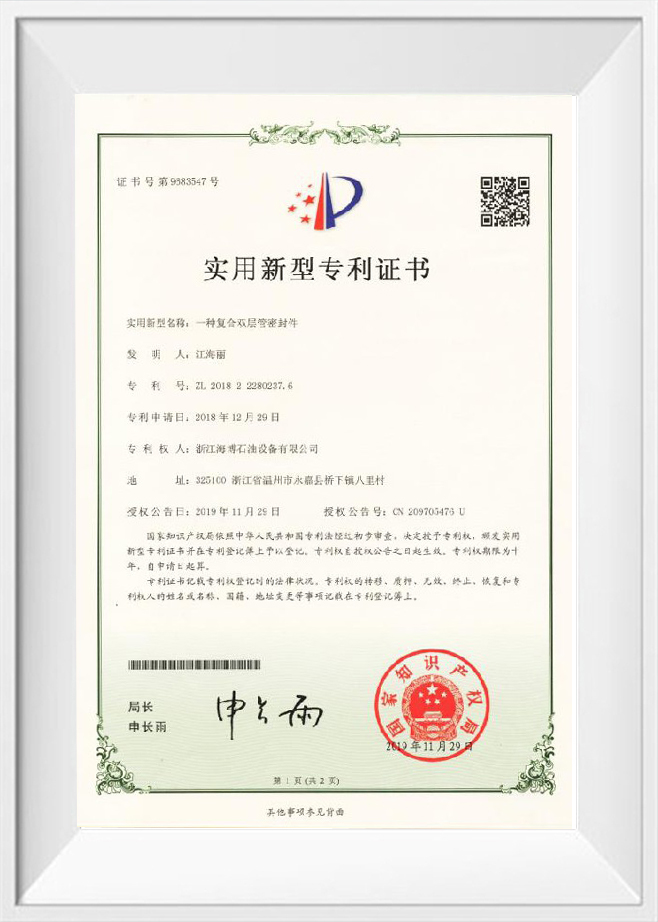
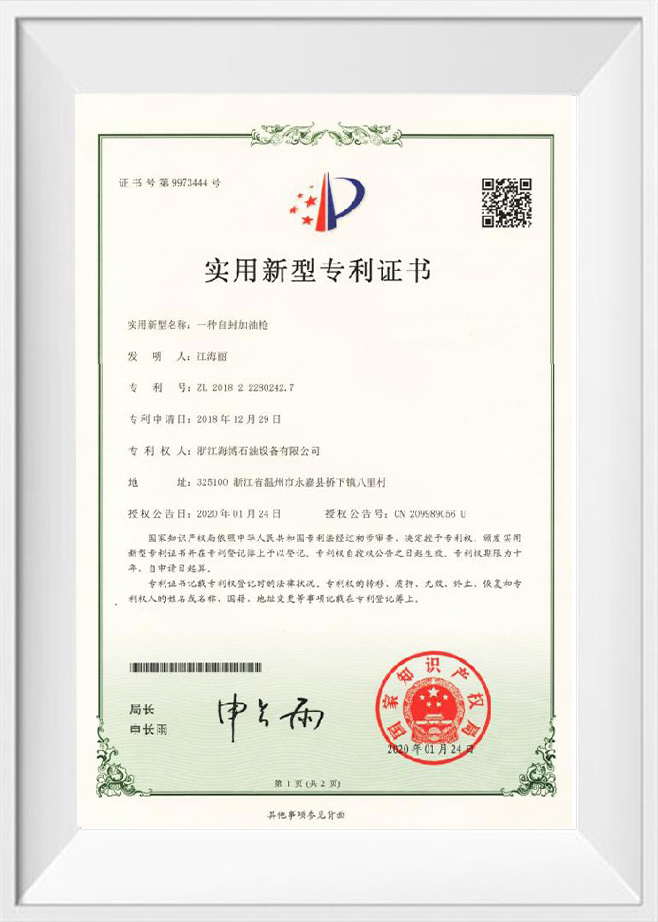
  • Utility Model Patent Certificate
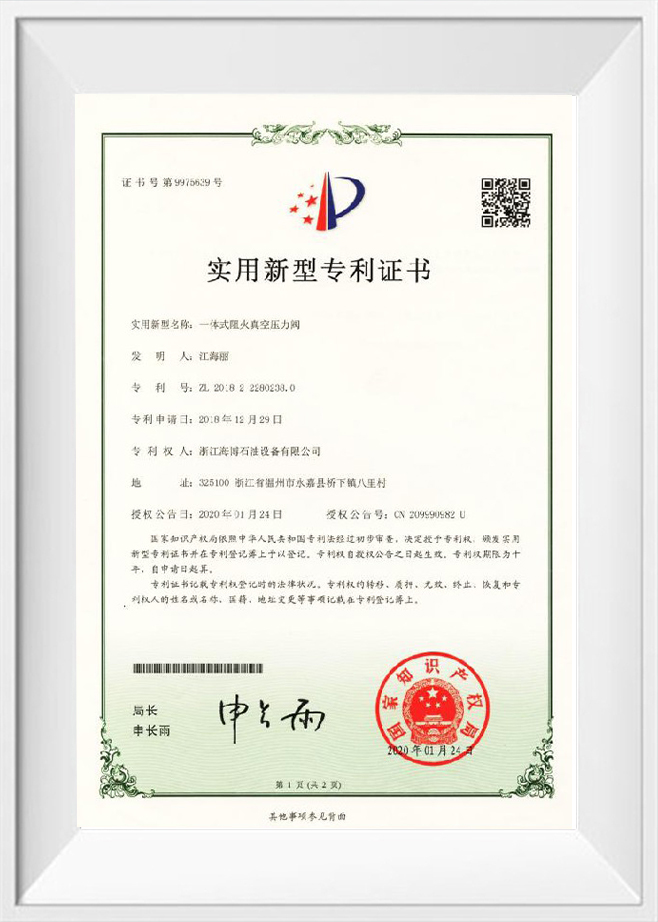
  • Utility Model Patent Certificate
  • Utility Model Patent Certificate
  • Utility Model Patent Certificate
  • Utility Model Patent Certificate
  • Utility Model Patent Certificate
  • Utility Model Patent Certificate
  • Utility Model Patent Certificate
  • Utility Model Patent Certificate
  • Utility Model Patent Certificate
  • Test Report
  • Test Report
News